For one animal feed business, the right technology might simply be a better way to manage customer names, addresses and conversations. For another, it could mean nutritionists recording individual animal assessments in the field, creating diet plans, tracking recommendations, analysing buying behaviour and sharing that information with colleagues back at the office. And for another, the biggest improvement might be connecting customer information with the website, marketing platform, ERP or other operational systems. The point is this: there is no single blueprint for technology for animal feed businesses.
We’ve worked with several businesses in the animal feed sector over the years, from small enterprises to larger and more complex organisations.
That experience has shown us that businesses operating in the same sector can have very different technology requirements.
The question isn’t, therefore, “What system should an animal feed business have?”
A much better question is: “Where is friction getting in the way of how our particular business works, and what is the simplest technology that will remove it?”
Key Takeaways
- Technology for animal feed businesses can range from simple contact management to highly tailored operational platforms.
- Complexity isn’t a measure of sophistication. The right solution is the one that fits how your business actually works.
- CRM can support much more than sales, including customer service, nutritional advice, field visits, marketing and relationship management.
- Connecting CRM with websites, marketing platforms, ERP and other systems can reduce duplicated work and improve visibility.
- Customisation becomes valuable when standard software no longer reflects the processes or measures that matter to your business.
- AI creates another opportunity, but good data, connected systems and clear processes should come first.
- Start with the operational problem, not the technology.
Level 1: When the spreadsheet has done its job
Spreadsheets are often where customer management begins and there’s nothing inherently wrong with that. When you’re a smaller business with a manageable number of customers, a spreadsheet can be quick, familiar and flexible. You don’t need a major digital transformation programme simply because you’ve reached a certain number of employees.
The problem comes when the spreadsheet starts doing a job it was never really intended to do. Customer information gets duplicated. Someone has a newer version. Notes sit in individual inboxes. A colleague knows something important about a customer, but nobody else can see it. Eventually, finding the information becomes harder than recording it. This is where relatively simple contact management or CRM can deliver value.
Customer example 1
For an animal feed business such as this Perth-based animal feed wholesaler, the requirement has historically been relatively straightforward: a structured database containing companies, contacts, addresses and the associated information the team needs.
Simple doesn’t mean inadequate.
If your business requirement is to give everyone one reliable place to find and update customer information, adding layers of functionality that nobody needs can actually make the experience worse. Technology has to earn its complexity.
Level 2: Supporting the people doing the job
Move along the scale and the requirements begin to change. Consider a business with representatives visiting customers or prospects out in the field. Now it isn’t enough for customer information to sit in the office. People need access to it where they actually work.
Customer example 2
This UK-based, family-owned feed manufacturer known for natural ingredients, non‑GM sourcing, and drug‑free production provides a good example. Their use of CRM has included mobile access for people working on site, alongside more traditional functionality such as managing customer information and sales opportunities.
This isn’t a heavily customised operating platform, nor is it just an electronic address book. It’s a useful middle ground. And it’s one that many businesses overlook.
There can be a temptation when reviewing business technology to jump from “we’ve outgrown our spreadsheets” straight to “we need a fully integrated, customised platform.” However, you may not. The right next step might simply be giving your people better access to accurate information and a consistent way of recording what happens when they’re with a customer. If that solves the friction, you’ve achieved what you set out to do.
Level 3: Joining up the customer journey
Then things get more interesting. CRM is often treated as if it belongs to the sales team. But in an animal feed business, some of the most important customer relationships may have very little to do with a traditional sales pipeline.
Customer example 3
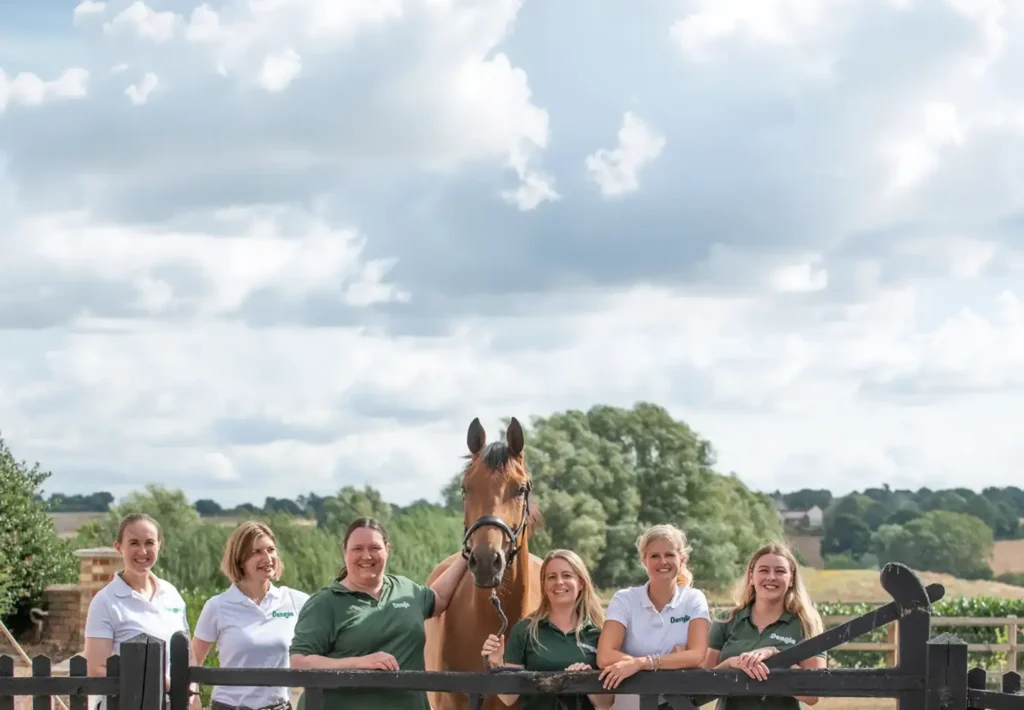
Dengie is a good example. Founded in 1968 as a farmer’s cooperative, Dengie is still run today with the same ethos of supporting the local farming community and producing sustainable feeds, growing as many of their own ingredients as possible. Its nutrition team supports horse owners looking for feeding advice.
A customer might visit the website because they have a question about their horse and need help deciding what to feed. That creates a very different customer journey. Rather than a website enquiry disappearing into an inbox, nutritional enquiries could flow into CRM as cases and be assigned to the appropriate person.
Just as importantly, the business could create a history. The system could hold information about the owner and their horse, including previous conversations and advice, so the next interaction did not have to begin from scratch.
For an individual horse owner that creates continuity. For a yard with multiple horses, it becomes even more valuable because there is potentially a much richer relationship to understand and manage.
The information also has value beyond the initial enquiry. Dengie’s CRM has been connected with Mailchimp, allowing relevant customer information and lists to support marketing communications. Suddenly, the technology isn’t simply storing contacts. It is helping information move from the website, through customer service and into appropriate ongoing communication.
That’s when technology starts supporting the customer journey rather than an individual department.
Tracey Hammond M.Sc (Dist), Equine Nutritionist at Dengie, says “We have experienced a huge shift in the efficiency of the business with the all-round delivery of service.”
Level 4: When the system needs to understand your world
Customer example 4
At the more complex end of the spectrum, we’ve worked with an animal nutrition business whose model required something very different. Its team worked with specialist and performance horses. Nutritionists would visit yards, assess individual horses and make detailed feeding recommendations. Try squeezing that into a standard CRM sales process – it doesn’t fit particularly well.
So instead, the technology was adapted around the real process. A yard visit could record information about individual horses. Nutritionists could capture recommendations, diet plans and forage reports and save that information against the appropriate record.
Someone back in the office could then access the history without having to call the nutritionist, search through emails or find a separate document. This is the point where CRM stops looking like a generic sales database and starts becoming part of the operational infrastructure of the business.
And another requirement demonstrates why that matters particularly well.
What if revenue isn’t the number that matters?
Most CRM systems are designed to measure sales opportunities in money. Pipeline value, forecast revenue, order value. Perfectly sensible for many organisations.
But this animal feed business needed to understand performance in tonnage. That changes things.
Custom fields, dashboards and reporting were therefore designed around the measure that meant something to that business rather than requiring employees to work around a standard CRM model. That principle extends far beyond animal feed.
Your technology should reflect how you make decisions, not force you to translate your business into somebody else’s idea of how it ought to work.
Sometimes the most valuable data isn’t in your back-office system
The same business also faced an interesting visibility problem – its end users often bought products through distributors.
The ERP could therefore show large orders from a distributor, but that didn’t necessarily tell the commercial team what an individual yard was buying.
That knowledge often came from the people visiting customers. They could ask what was being purchased, how much was being used and whether buying patterns were changing. Recorded consistently, those conversations became useful operational intelligence.
If a yard’s consumption appeared to be dropping, the business had an opportunity to understand why and potentially address an issue before the relationship deteriorated further. That’s a good reminder that digital transformation isn’t simply about connecting every available database. Sometimes important information exists in conversations, site visits and the knowledge your employees carry around with them. The opportunity is to identify which of that information has business value and make it usable.
Level 5: Connecting the wider operation
As requirements become more sophisticated, another problem tends to emerge. You don’t necessarily need another piece of software. You need the software you’ve already got to work together.
An animal feed business might have:
- CRM holding customer and relationship information
- An ERP or back-office platform managing orders and operations
- A website generating enquiries
- An email marketing platform managing campaigns
- Finance software
- Reporting tools
- Specialist operational systems.
Individually, each may work perfectly well. The operational friction appears in the gaps between them.
- An enquiry arrives on the website and someone copies it into another system.
- A customer changes their details and three applications need updating.
- Marketing exports a spreadsheet because it can’t access the data it needs.
- A salesperson asks Operations for information because they can’t see it themselves.
- Someone becomes the human connection between systems that could be sharing information automatically.
The ambition shouldn’t be to integrate everything simply because it’s technically possible. Instead, look at where information crosses from one process to another and ask:
Where are people repeatedly moving, checking, chasing or recreating information because our systems don’t?
That’s often where integration delivers the greatest value.
So, how much technology does an animal feed business actually need?
Probably less than you think in some places and potentially more sophisticated technology than you realise in others. That’s why we’d resist starting with a checklist of “essential technology for animal feed businesses”.
Start with your operation instead and ask:
1. Where is your customer information today?
Is there one trusted place to find it, or do people rely on spreadsheets, inboxes and individual knowledge?
2. How do enquiries move through the business?
If somebody asks for nutritional advice, raises a query or expresses an interest, what happens next? Is ownership clear?
What happens away from the office?
If salespeople, nutritionists or technical advisers visit customers, can they see and capture the information they need while they’re there?
4. Where are people entering the same information twice?
Look particularly at the gaps between your website, CRM, ERP, finance and marketing systems.
5. What information actually helps you make decisions?
Don’t accept a dashboard full of standard metrics simply because they’re available. For one business it might be revenue. For another, tonnage. For another, changes in purchasing frequency, nutritional enquiries, inactive customers or the number of animals being supported.
Start with the decision. Then decide what data needs to support it.
6. Where have people created workarounds?
That spreadsheet someone created “just for now” three years ago is worth examining. So is the weekly manual report. Or the person everybody asks because they’re the only one who knows where something is.
Those workarounds are often clues to where operational technology isn’t quite supporting the real business.
And what about AI?
AI introduces an interesting next step for the sector but we’d apply exactly the same rule.
Don’t start with AI. Start with the problem.
Once a business has accessible, reliable information and clear processes, AI could potentially help teams spot patterns and exceptions much faster.
Instead of reviewing customer lists manually, for example, you might surface customers whose normal buying pattern has changed.
Instead of reading through a long customer history, a nutritionist or adviser might receive a concise summary before speaking to them.
Customer enquiries could be categorised and routed more quickly. Field notes could be summarised. Managers could ask questions of operational information rather than working their way through multiple reports.
But AI doesn’t remove the need for good foundations.
If customer records are unreliable, systems aren’t connected and processes vary depending on who performs them, placing AI over the top doesn’t magically resolve the underlying friction.
Better AI starts with better operations.
The real measure of good technology? How well it fits the business
There is a persistent assumption in business technology that sophistication means having more. More features. More automation. More integrations. More dashboards. More AI. We don’t think that’s particularly useful.
- A straightforward contact management system that solves a small animal feed company’s information problem is a good solution.
- A mobile CRM that helps representatives work effectively in the field is a good solution.
- A connected customer service and marketing process is a good solution.
- And a highly customised platform for nutritionists managing detailed information about individual horses can be a good solution too.
They are different levels of complexity because they are solving different problems.
The goal isn’t to build the most sophisticated technology environment. It’s to create the least complicated environment capable of supporting the way your business needs to work.
That’s a very different starting point, and, in our experience, it’s usually a much better one.
How Avrion can help
At Avrion, we don’t start by assuming you need to replace your CRM, buy another system or embark on a large transformation project. We start with how your business actually works.
- Where is information created?
- Who needs it?
- What happens to it next?
- Where are people rekeying data, chasing colleagues, maintaining spreadsheets or working around technology?
From there, we can help you decide whether the sensible next step is to improve, connect, simplify, automate or replace what you already have.
For an animal feed business, that could mean anything from better contact management to a tailored operational platform connecting customer, field, marketing and back-office processes.
The complexity should come from the business problem, not from the technology.
Want to understand where technology could remove friction from your animal feed business? Talk to Avrion about your current processes and systems.
Frequently Asked Questions
What technology does an animal feed business need?
There isn’t a standard technology stack that every animal feed business needs. Requirements depend on factors such as business size, route to market, types of customers, field-based activity, nutritional services, order processes and existing back-office systems. Start by identifying operational problems before selecting technology.
Does an animal feed business need CRM?
Not necessarily, but once customer information becomes difficult to manage consistently through spreadsheets, email or individual knowledge, CRM can provide a useful single source of customer information. It can also support enquiries, field activity, marketing and relationship management.
Can CRM integrate with an ERP or order management system?
Yes. Where there is a clear business case, CRM can be connected with ERP, finance, marketing, websites and other operational platforms. The important question isn’t whether systems can be connected, but which information needs to move between them to reduce administration, improve visibility or create a better customer experience.
Can animal nutrition teams use CRM?
Yes. CRM doesn’t have to be restricted to conventional sales processes. It can be configured to support nutritional enquiries, customer cases, site or yard visits, recommendations and other specialist processes where maintaining a clear history improves service.
Should we customise CRM or use an off-the-shelf system?
Start with standard functionality wherever it meets the requirement. Customisation becomes valuable when a genuine business process, data structure or reporting requirement cannot be represented effectively by the standard system. Don’t customise for the sake of it.
Where could AI fit into an animal feed business?
Potential applications include summarising customer histories, identifying changes in purchasing patterns, prioritising follow-ups, categorising enquiries, processing documents and making operational information easier to interrogate. However, AI works best when the underlying data, processes and systems are already in good order.